
Trigger Happy
Tottenham Hotspur sit in nearly the same position they were in last year. They’re closer to getting in a relegation scrum than they are to European qualification. It will be their fourth straight season outside the top four and their second straight in the bottom half. Despite their “big six” status, Spurs are floundering. Why have they lost their foothold in England and where do they go from here?
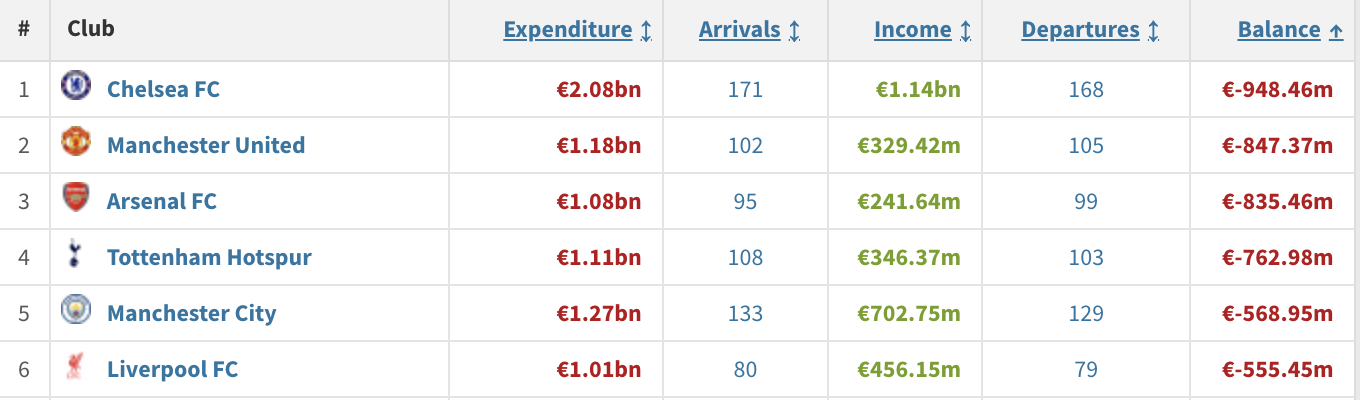
Tottenham’s struggles can’t be pinned on a lack of resources. Since the 2020-21 season, Spurs have had the fourth highest net spending in the league. It towers over even the net spend of Manchester City and Liverpool, the only teams to win titles over that period. Tottenham’s financial powers flies under the radar. Last year, Deloitte listed them as the team with the 9th highest revenue in the entire world. The club’s 2025 revenue was over 670 million euros. On top of that, their wages to revenue ratio was lower than all the other English clubs in the top 20 globally (Man City, Man United, Liverpool, Chelsea, Villa, Newcastle, and Arsenal). Money is not an issue, the way they’re spending it is.
Waves have been made recently over Thomas Frank’s severance package. Some sources say it was more than £15 million. Factor in the £6.7 million spent to bring him over from Brentford— that’s pretty bad business. But I’m not here to criticize the money spent on Frank. His firing shows a more important pattern, though. Only six teams have been in the Premier League in every season since its creation. They’ve seen plenty of managers come and go; some have gone through more changes than other. In the Premier League era, here’s the number of permanent managers they’ve all had:
Arsenal – 5
Manchester United - 8
Liverpool - 9
Everton - 15
Chelsea - 19
Tottenham – 20
You read that right. Spurs have had 20 managers over 34 Premier League seasons. Consider that Pochettino was there for five years and Redknapp for four and you get an idea of just how unstable the club leadership has been. Managers rarely last more than two seasons. This creates a problem. New managers bring new ideas. They want certain players to help them put their ideas onto the pitch. They establish a culture and a playing style. When you’re constantly changing managers, that culture can get lost along with the cohesion of the football. The Tottenham players as individuals are good, but somehow, it’s not a good enough squad to win. Few of them were even signed or debuted by the same manager. Tottenham Hotspur feels like a massive painting done by a dozen painters that never communicated with each other. There isn’t a known plan, just remnants of five or six of the most recent plans.
How do things change at Tottenham? By not making so many changes. Spurs need to commit to a plan and invest in it. Whoever they choose to appoint as manager this summer needs to stay for three seasons at the least. They can go ahead and have a transfer overhaul this summer, but after that, they need to focus on developing the players they have in the building. Spurs need identity and stability. It’s the most undervalued attribute of any successful sports franchise.